
Helping Ohio Families Bridge the Gap Between Retirement Planning, Taxes, and Estate Planning
Helping Ohio Families Bridge the Gap Between Retirement Planning, Taxes, and Estate Planning
Estate Planning in Ohio
A modern approach to estate, tax, and retirement planning for individuals and families across the state of Ohio.
We provide educational workshops and planning guidance throughout Ohio, helping families better understand how to protect assets, reduce tax exposure, and create a more efficient path for wealth transfer.
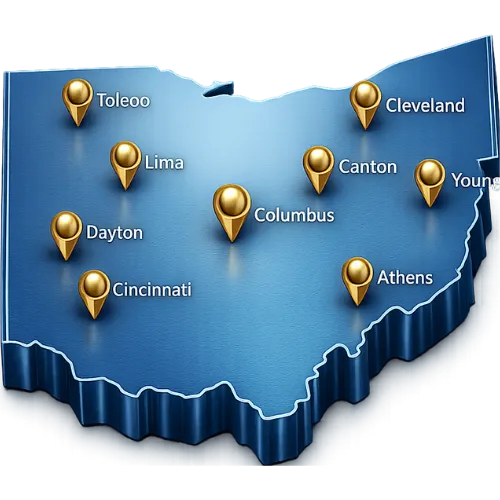
Serving Families Across Ohio
Select the area closest to you to learn more about estate planning resources and workshops near you.
A Statewide Approach To Modern Estate Planning
Estate planning today is no longer just about documents. For many Ohio families, it involves coordinating retirement accounts, tax strategy, beneficiary designations, and long-term legacy goals into one unified plan.
We work with individuals and families across Ohio to help simplify these decisions through education and a more structured planning approach.
Ohio families should know
Estate Planning Considerations For Ohio Families
Estate planning in Ohio involves several important considerations, including probate, beneficiary design, and how assets are transferred under state-specific guidelines.
Probate in Ohio
Probate is the legal process used to transfer assets after death, and in Ohio, it can involve court oversight, time delays, and additional administrative steps depending on how assets are titled. While some assets may pass directly to beneficiaries, others may be subject to probate if not properly structured in advance.
For many families, the goal of estate planning is to simplify or avoid this process where possible, helping ensure assets are transferred more efficiently and with less burden on loved ones.
State-Specific Planning Considerations
Estate planning in Ohio involves more than just creating documents—it requires understanding how state-specific rules affect decision-making authority, asset ownership, and how plans are carried out. Powers of attorney, healthcare directives, and trust structures must align with Ohio guidelines to function as intended.
Proper planning helps ensure that instructions are clear, legally recognized, and easier for others to follow when important decisions need to be made.
Retirement Accounts & Beneficiaries
For many Ohio families, a significant portion of wealth is held in retirement accounts such as IRAs and 401(k)s. These assets do not pass through a will or trust in most cases, but instead transfer directly to named beneficiaries.
How these accounts are structured—and who is named—can have a major impact on taxes, timing of distributions, and overall outcomes for beneficiaries. Coordinating beneficiary designations with the rest of an estate plan is an important step that is often overlooked.
Tax Considerations
While Ohio does not currently impose a state estate tax, taxes can still play a significant role in estate and retirement planning. Income taxes on retirement account distributions, changes in tax brackets, and future tax law adjustments can all affect how much is ultimately passed on.
Many planning decisions today involve understanding how and when taxes may apply, and how strategies can help improve overall efficiency over time.
Estate Taxes in Ohio
While many people assume estate taxes are a major concern, Ohio does not currently have a state estate tax. This means that, for most Ohio families, assets are not subject to an additional state-level estate tax at death.
However, federal estate tax rules may still apply for larger estates, and tax exposure can still exist in other areas—particularly with retirement accounts such as IRAs and 401(k)s. For many families, the greater planning opportunity lies in understanding how income taxes and distribution strategies impact what loved ones ultimately receive.
Understanding Is One Thing. Seeing It Applied Is Another.
Learn Estate Planning Through Our Ohio Workshops
Our educational workshops are held throughout Ohio and are designed to help individuals and families better understand how estate planning, tax strategy, and retirement decisions work together.
Rather than focusing on isolated topics, these workshops provide a structured approach to help you see the full picture so you can identify potential gaps, ask meaningful questions, and better understand the decisions in front of you.
Helping Ohio Families Make More Informed Decisions
Many individuals spend years building savings and assets, yet never receive clear guidance on how those assets will be managed, taxed, or transferred in the future.
Our focus is on helping Ohio families better understand these decisions so they can move forward with greater clarity, avoid common planning gaps, and feel more confident about the long-term impact of their choices.
Explore Estate Planning In Your Area
We provide estate planning education and workshops across Ohio. Select your city below to learn more about local resources and upcoming opportunities near you.
Start With Education. Move Forward With Confidence.
Estate planning, tax strategy, and retirement decisions are too important to approach without clarity. Understanding how these pieces connect is the first step toward making more informed, confident decisions for your future.
Our workshops are designed to help you see the bigger picture so you can move forward with a clearer understanding of what matters most.
Quick Links
Contact Us
Estate Plan 4 You
2014 Champions Gateway
Canton, Ohio 44708
Legal
Connect


© 2026 Fleming Parries Strategic Advisors LLC. All rights reserved.
Estate Plan 4 You is a brand operated by Fleming Parries Strategic Advisors LLC.